


On May 5, 2026, the Symposium of International Relations in the Eyes of SIS Alumni was successfully held at the Qiulin Lecture Hall of the School of International Studies (SIS), Peking University (PKU). As a key component of the 30th-anniversary celebration of the School’s founding, the symposium gathered alumni and distinguished guests from nearly 20 domestic universities and research institutions.
Institutions represented included Peking University, Renmin University of China, Nanjing University, University of Macau, The Chinese University of Hong Kong (Shenzhen), Tongji University, China Foreign Affairs University, University of International Relations, Beijing Foreign Studies University, Communication University of China, Huaqiao University, China Women’s University, Beijing Language and Culture University, Central School of Communist Youth League (China Youth University of Political Studies), Shaanxi Normal University, Dalian University of Foreign Languages, and the China Institutes of Contemporary International Relations.
Attendees engaged in in-depth discussions on major contemporary theoretical and practical issues in international relations, including the construction of China’s autonomous knowledge system in international relations, Sino-foreign relations, Global South cooperation, the evolution of the international economic and trade landscape, and the impact of artificial intelligence on international relations. Together, they shared insights on academic heritage and the responsibilities of the era. The opening ceremony was moderated by Kang Tao, Party Secretary of the SIS at Peking University.
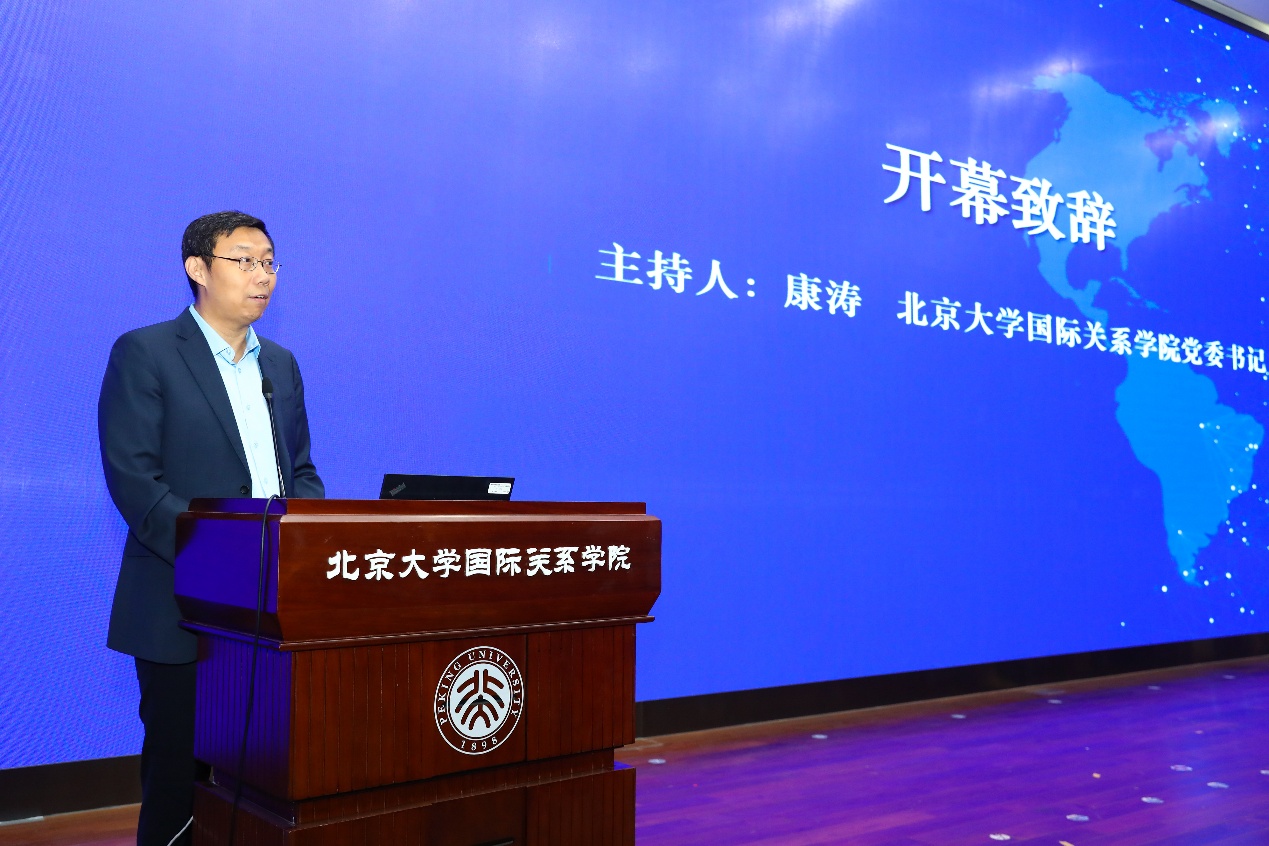
Conference Scene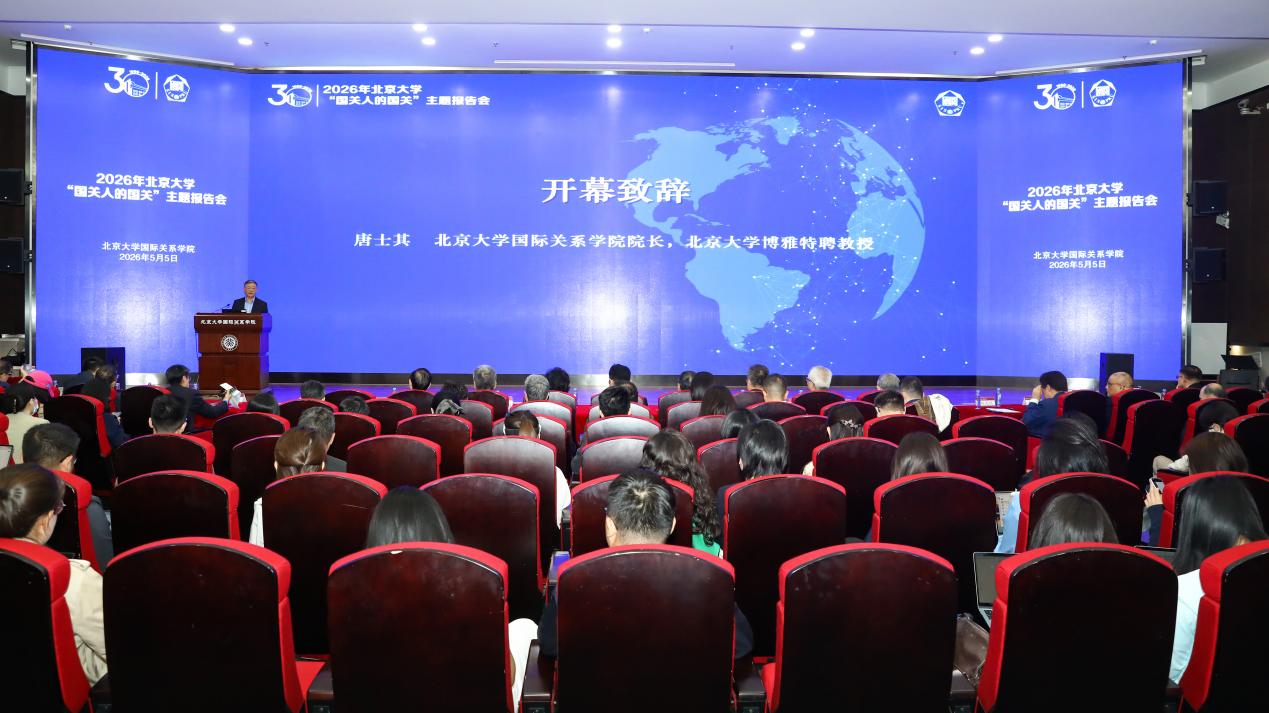
Kang Tao Moderating
Professor Chu Xiaobo, Vice President of Peking University, delivered the opening remarks. He noted that China’s development is in a critical period where strategic opportunities coexist with risks and challenges, and unpredictable factors are increasing. The nation’s demand for the international relations discipline is more urgent than ever. He expressed his hope that the academic community will translate the diplomatic practices of major countries in the new era into academic discourse, extract theoretically original and identifiable concepts from the accumulation of Chinese culture, promote interdisciplinary integration to understand the complex international relations behind unprecedented global changes, and forge a confident, responsible, and inclusive academic character to drive the construction of an autonomous knowledge system in China’s international relations.

Chu Xiaobo Delivering Opening Remarks
In his welcome address, Tang Shiqi, Dean of the SIS and Boya Distinguished Professor at Peking University, stated that the symposium served as a report to the academic community and society on the School’s achievements in talent cultivation. Over the past 30 years, the School has cultivated a large number of outstanding talents who possess both a global vision and a deep affinity for China. However, as the world remains full of contradictions and conflicts, and the international order urgently requires profound transformation, scholars of international relations still shoulder heavy responsibilities. He emphasized that the School will take the 30th anniversary as an opportunity to further uphold fundamental principles while breaking new ground, face the world and the future, ground its work in Chinese practice, condense Chinese theories, and cultivate even more outstanding international talents.
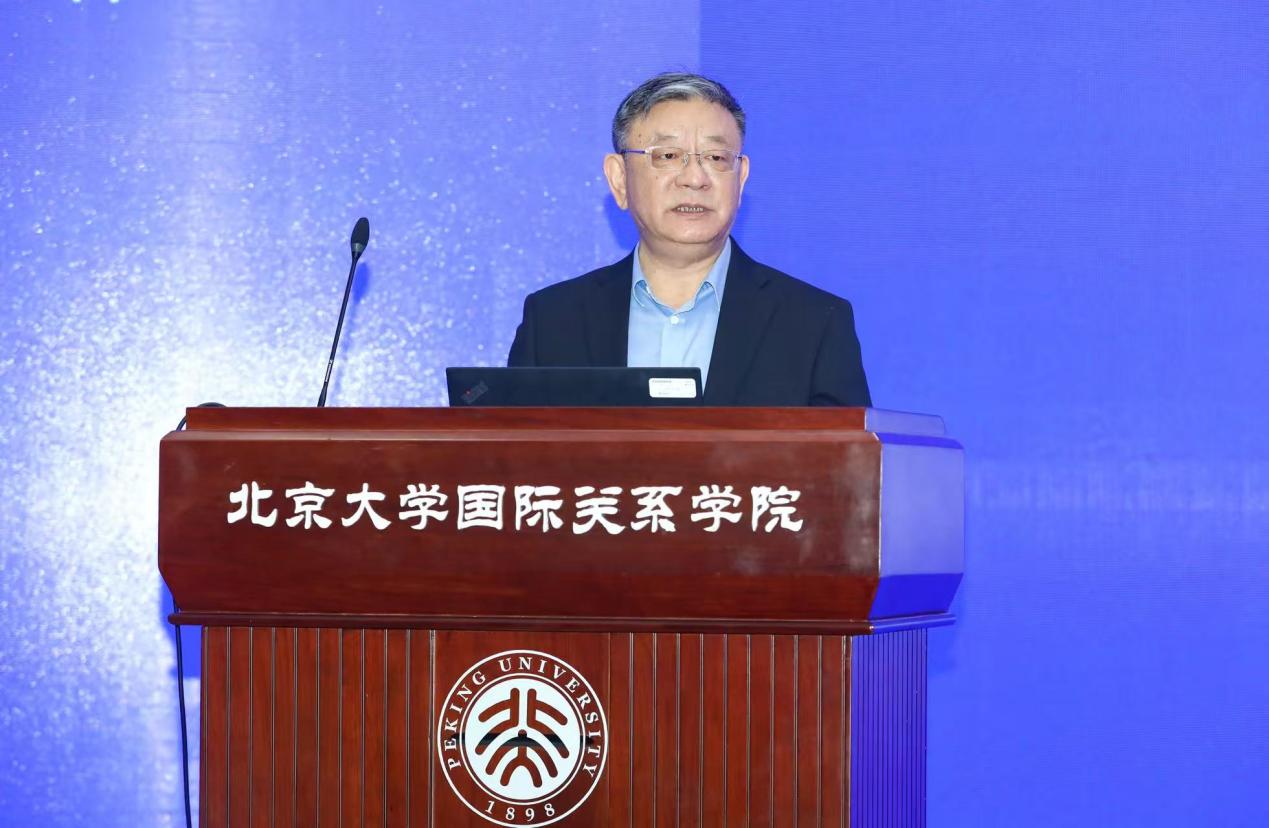
Tang Shiqi Delivering Opening Remarks
Professor Wang Zhengyi, Director of the Academic Committee of the SIS and Boya Distinguished Professor at Peking University, moderated the first session of the morning symposium.
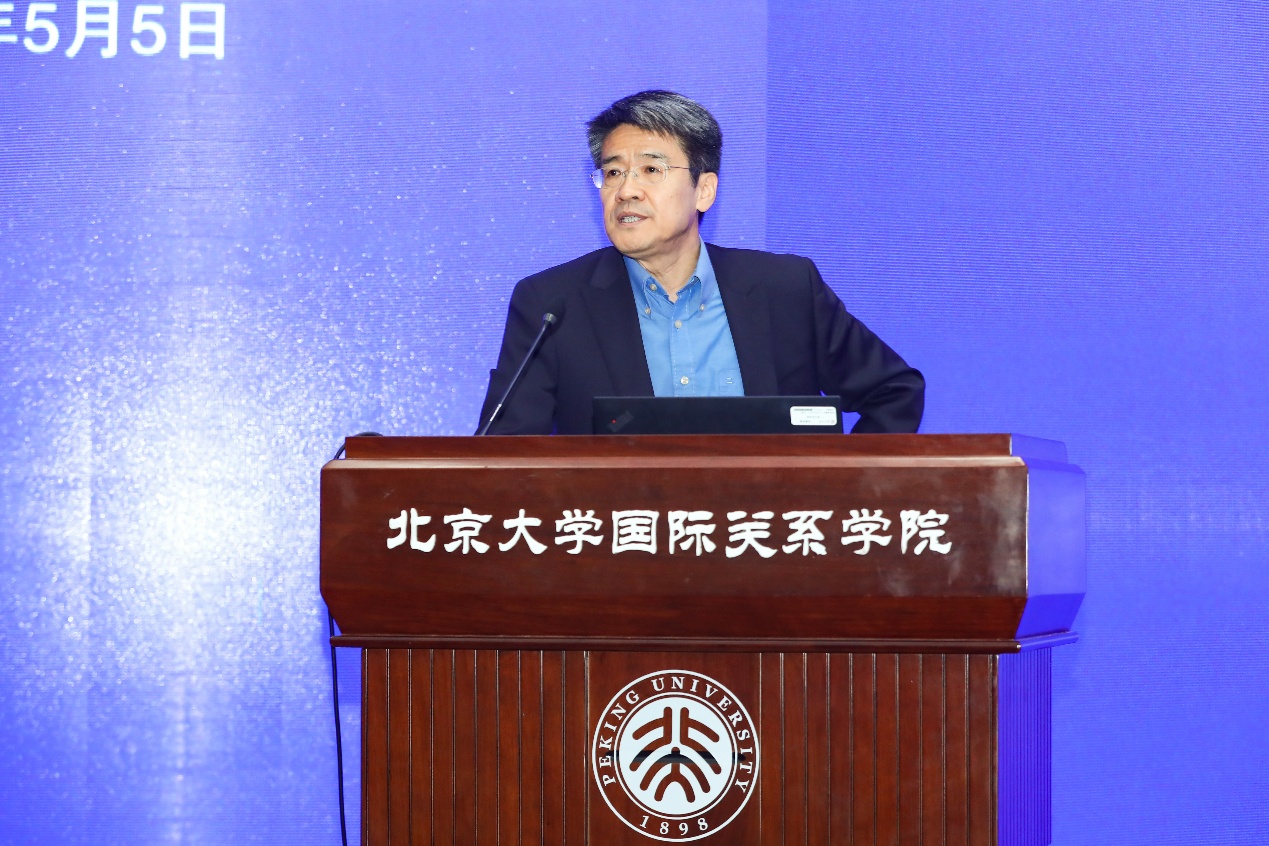
Wang Zhengyi Moderating
Zhou Qiangwu, Vice President and Chief Administrative Officer of the New Development Bank (NDB), delivered a special report titled “Viewing Global South Cooperation Amidst Century-Old Changes from the Perspective of the New Development Bank.” From a practical standpoint, he pointed out that the continuous deepening of Global South cooperation is an irreversible trend of the times. As the world’s only multilateral development institution entirely led, built, and operated by “Global South” countries, the NDB has become an emerging force in the international financial system over the past decade. He highlighted the NDB’s innovative practices in governance structure, business models, and local currency financing, noting that its principles of balanced equity, no political strings attached, and respect for member states’ sovereignty fully reflect the concept of fairness. In the interactive session, addressing talent cultivation for international organizations, he emphasized that IR students should broadly study interdisciplinary knowledge—such as economics, sustainable development, and climate change—while strengthening their language skills to enhance their competitiveness in international institutions.
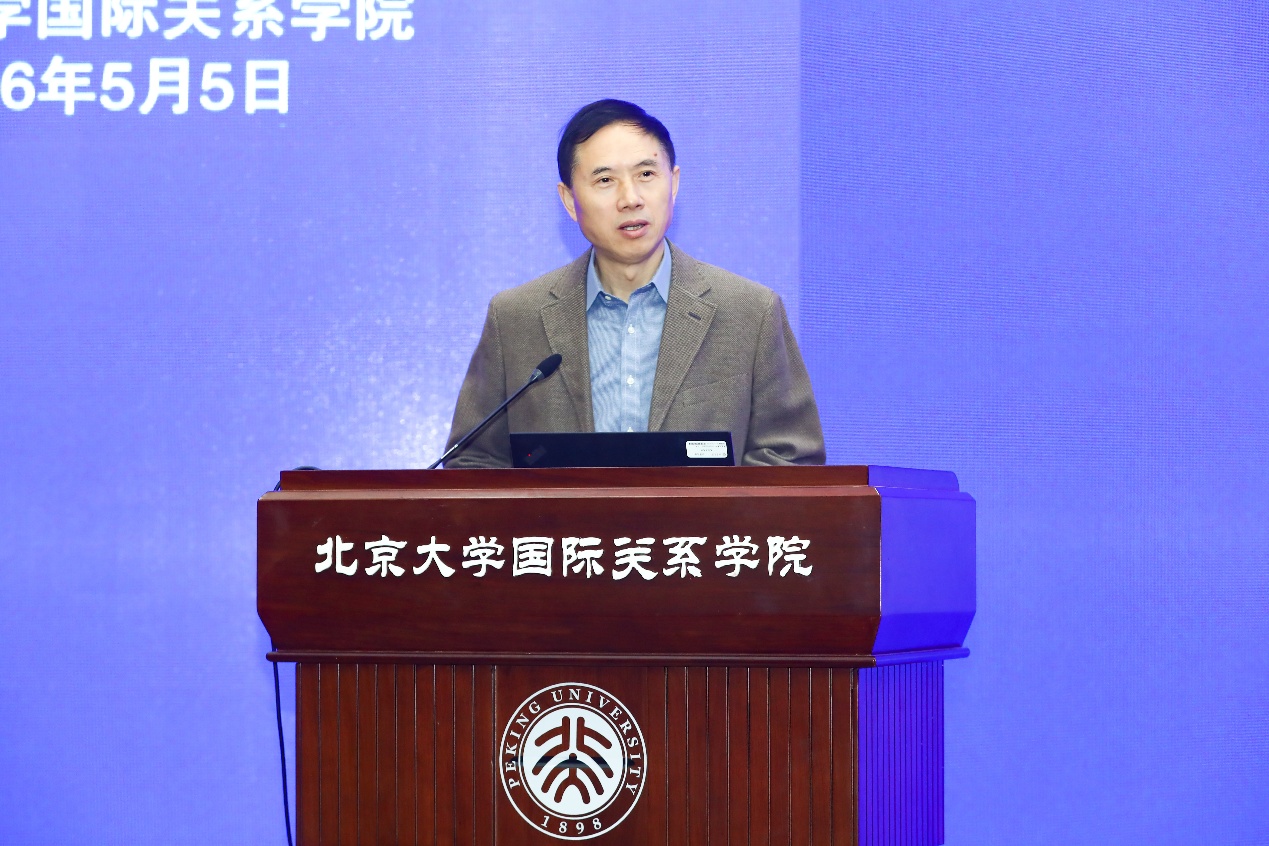
Zhou Qiangwu Speaking
Yuan Ming, Professor at the SIS and Honorary Dean of Yenching Academy, shared her academic journey spanning decades in a presentation titled “The Starry Sea of International Relations.” Guided by the thread of “simple curiosity,” she recounted her experiences from leading major national social science projects to teaching freshmen about “China and the World from a Broad Historical Coordinate.” She noted that economic globalization is impacting the global cultural landscape, highlighting the growing imbalance between material dominance and cultural weightlessness, with all major cultures facing challenges to their self-identity. She stressed that the exploration of international relations is endless, requiring continuous curiosity, a heroic spirit, a gentleman’s demeanor, and a deep affection for Yan Yuan, vividly illustrating the era’s responsibility of IR scholars.
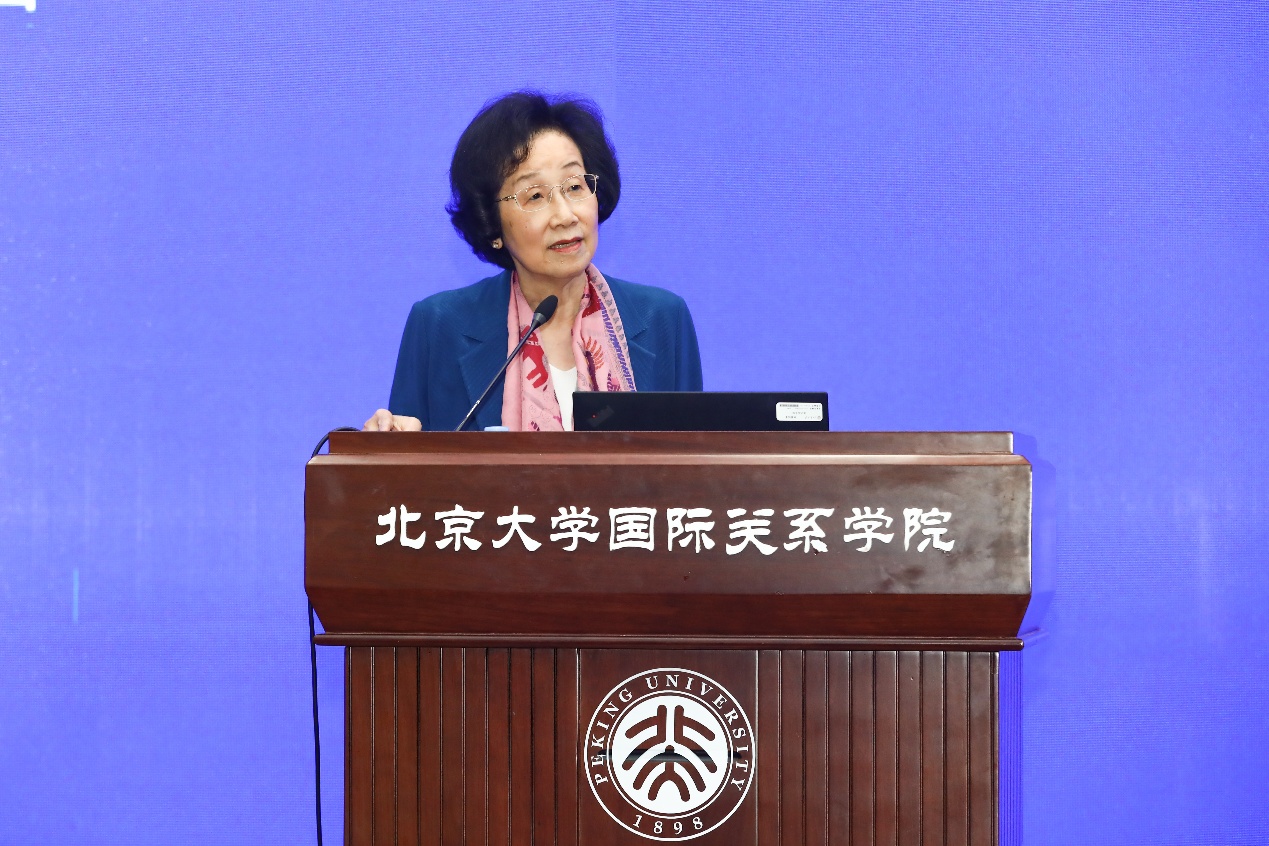
Yuan Ming Speaking
Hu Weixing, Dean of the Faculty of Social Sciences and UMDF Distinguished Professor at the University of Macau, delivered a report on “Reflections on Constructing China’s Autonomous Knowledge System in International Relations.” Starting from the concept of autonomy, he clarified that “autonomous” does not mean “uniquely Chinese” or decoupling entirely from the global knowledge system, nor does it imply a lack of universality. Autonomous theories must dialogue with global theories. He traced the development of Chinese IR theory, emphasizing the need to extract original theories directly from China’s great practices rather than merely applying Western concepts to Chinese cases.
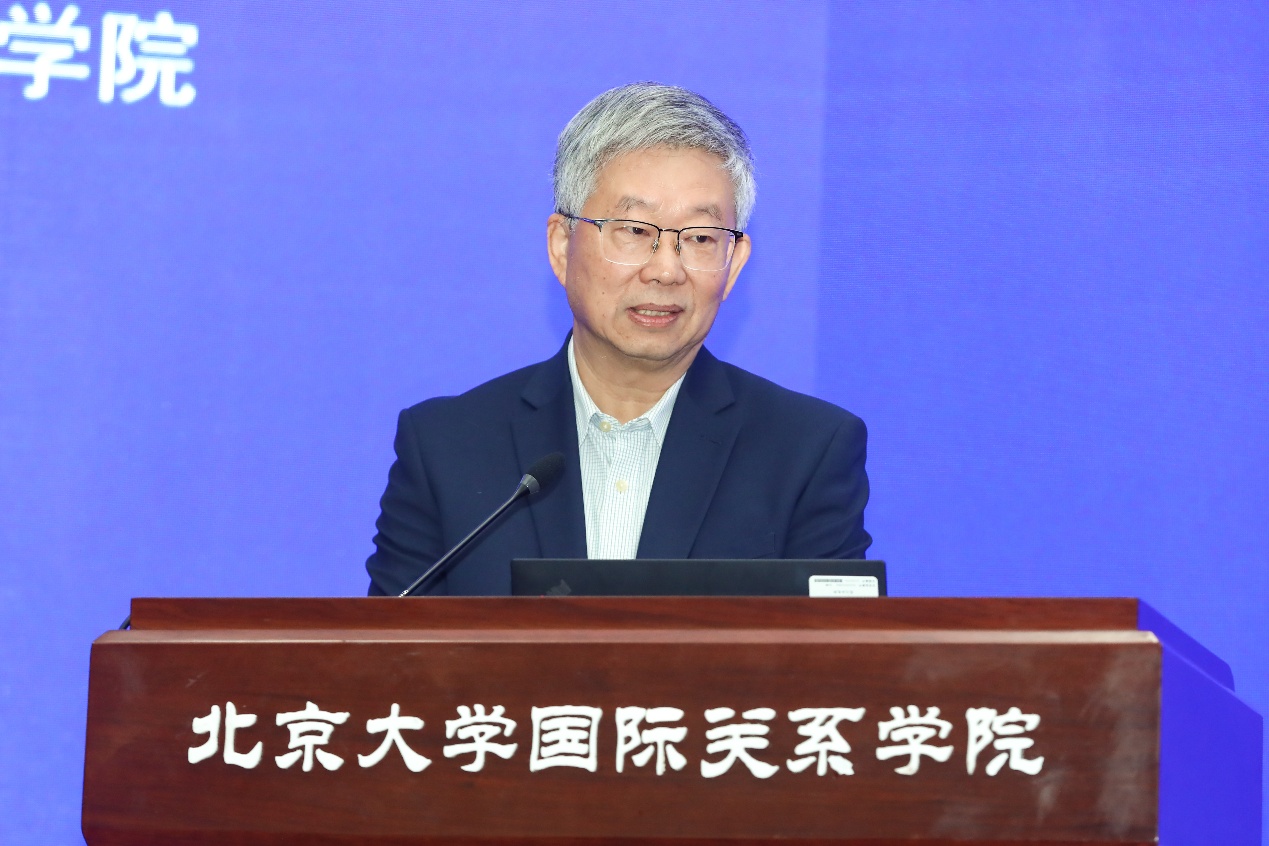
Hu Weixing Speaking
Yang Guangbin, Dean of the School of International Studies at Renmin University of China, presented on “The Historical Ontological Concepts of Historical Political Science.” He systematically explained the disciplinary logic of historical political science, noting that core social science concepts (e.g., democracy, autocracy) stem from comparative historical research. He argued that the differing historical attributes of human political origins dictate fundamental differences in institutional evolution: Western state evolution centered on confrontation, while China’s tradition of unification centered on governance to win the people’s hearts.
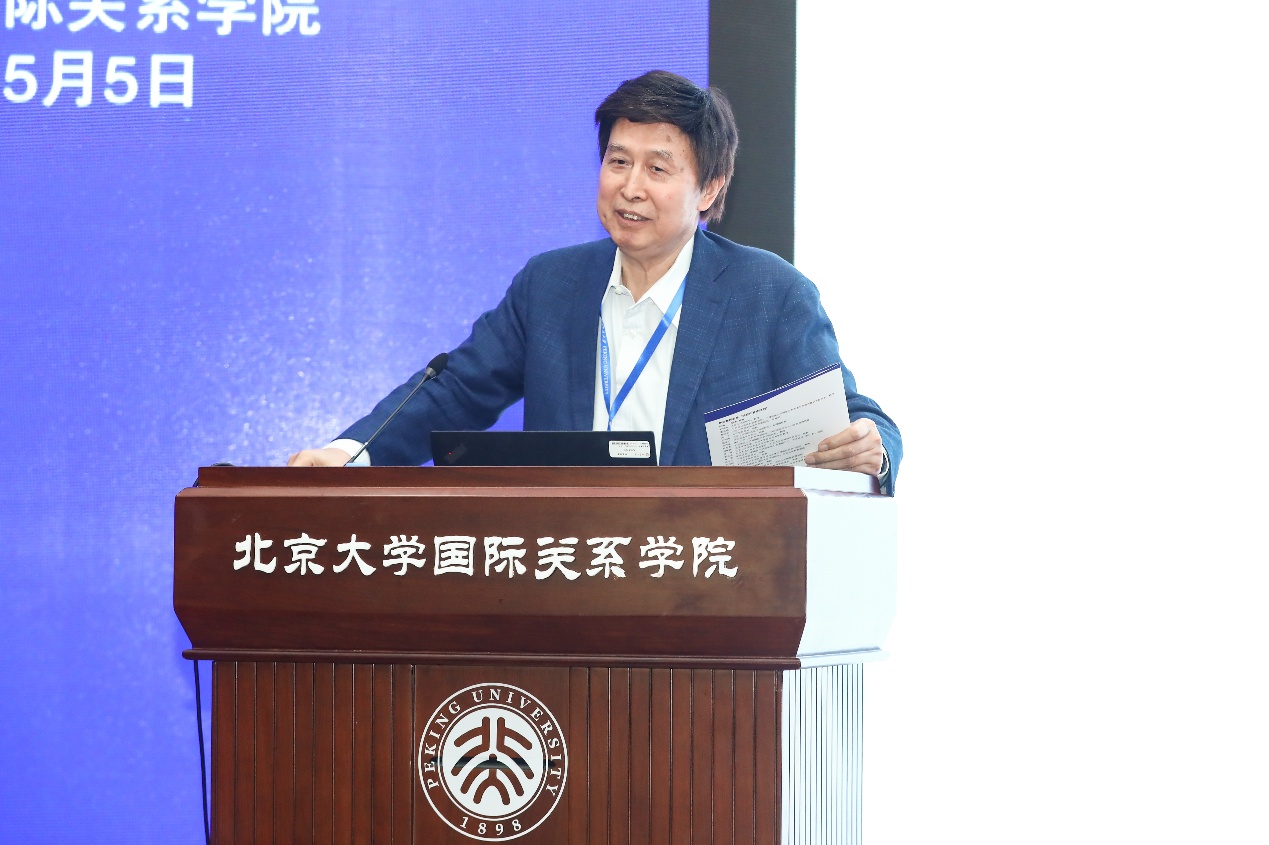
Yang Guangbin Speaking
Tang Wenfang, Dean of the School of Humanities and Social Science at CUHK-Shenzhen, reflected on his studies since enrolling in 1978 under the title “My PKU SIS.” He noted that his four years at PKU provided three lifelong assets: a mindset for historical background and process analysis, an independent spirit, and the confidence not to be easily intimidated by authority.
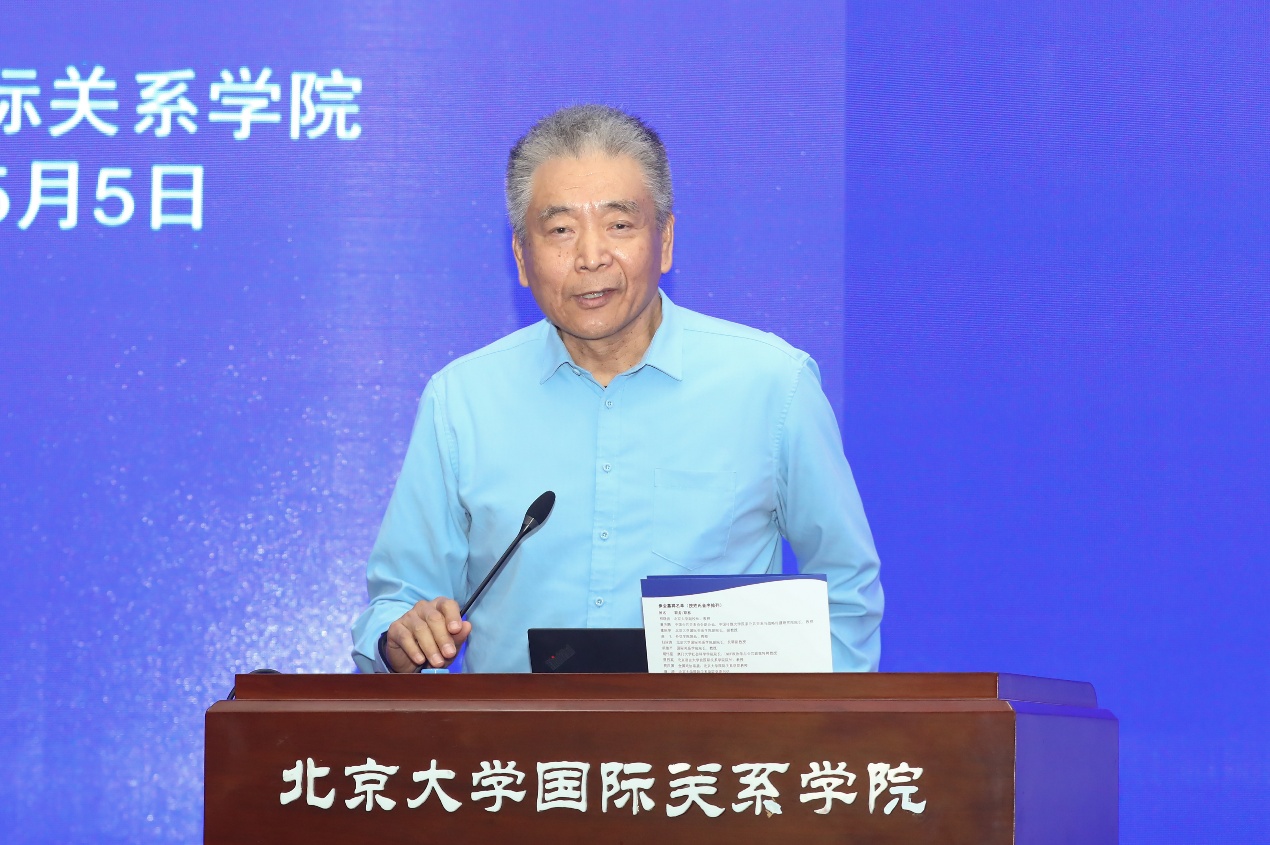
Tang Wenfang Speaking
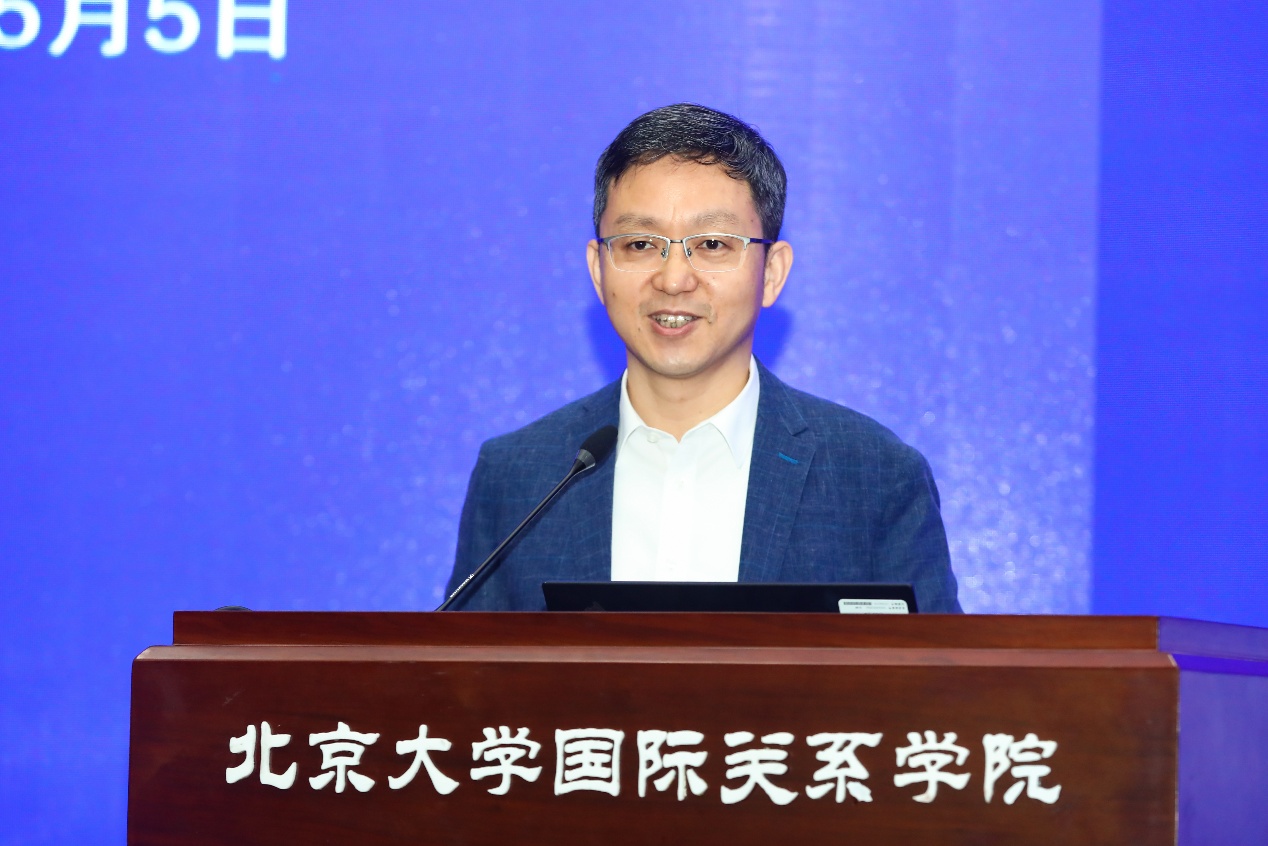
Gui Yongtao Moderating
Zhu Feng, Dean of the School of International Studies at Nanjing University, spoke on “The PKU Sentiment in China’s International Relations Talent Cultivation and Academic Research.” Reviewing his 45-year journey studying and teaching at PKU SIS, he highlighted the excellent academic atmosphere of the 1980s. He urged young scholars to remember that “forgetting war places a nation in peril” and to shoulder the responsibility of autonomous academic innovation.
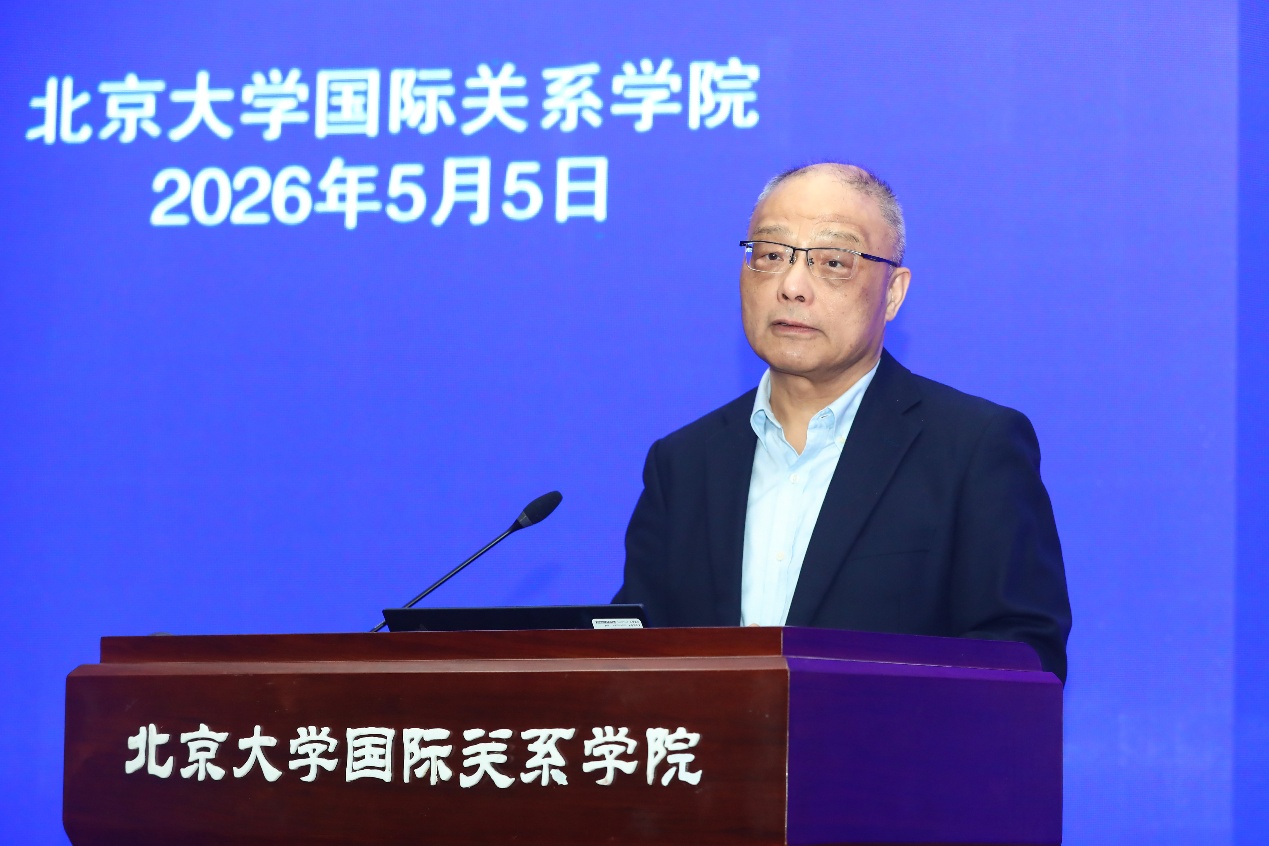
Zhu Feng Speaking
Hu Jiping, Dean of the University of International Relations, discussed “Sino-Japanese Relations, Japanese Studies, and Area Studies Talent Cultivation.” He noted that current Sino-Japanese relations are experiencing systemic changes and facing their most severe period since Japan’s surrender. He advocated that area studies must integrate history and the present, solidifying foundational research in history, culture, and social structure.
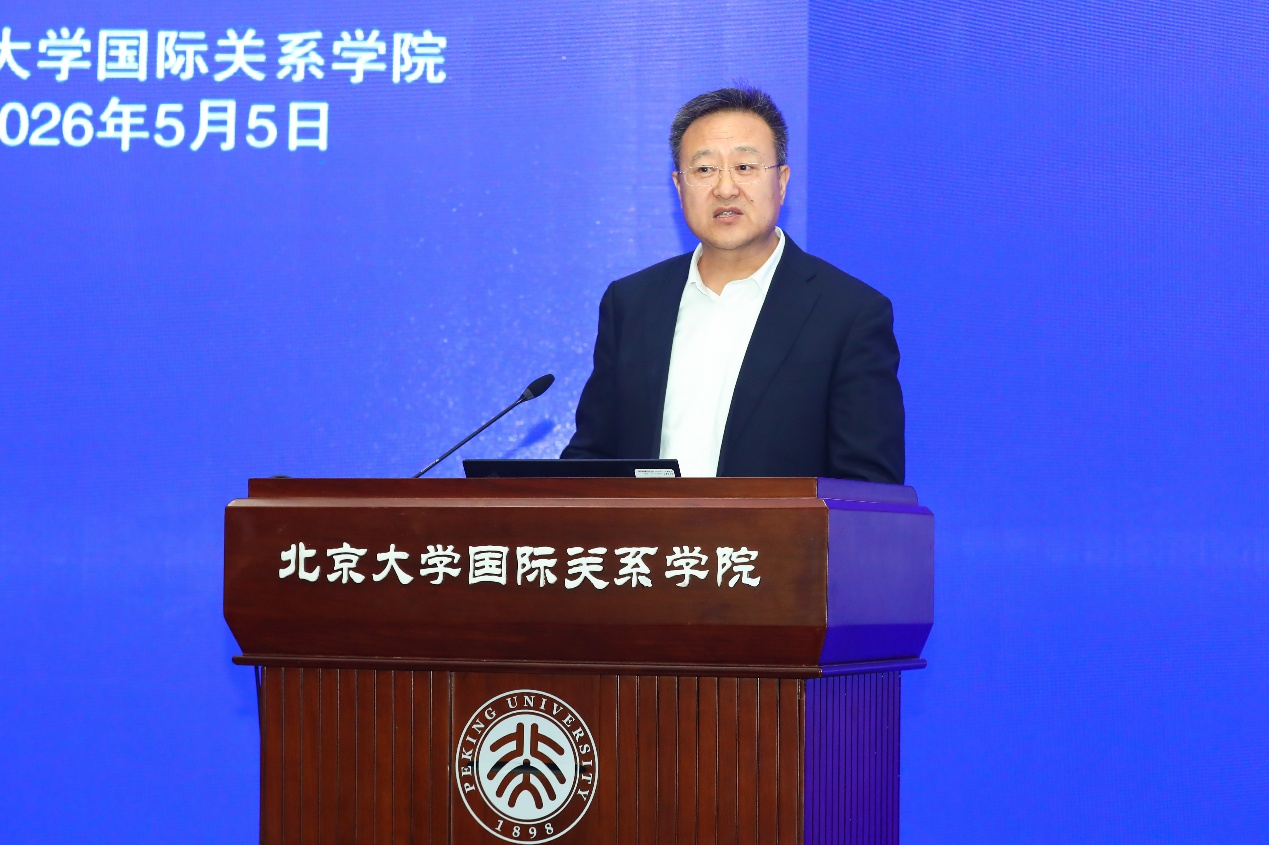
Hu Jiping Speaking
Yang Mingjie, Former President of the China Institutes of Contemporary International Relations (CICIR), addressed “New Opportunities for IR Research in the AI Era.” He warned that AI has profoundly altered the power structure of international forces, compressing military decision-making to milliseconds. He called for accelerated construction of dedicated Chinese AI models to address the current Western bias in underlying data and algorithms.
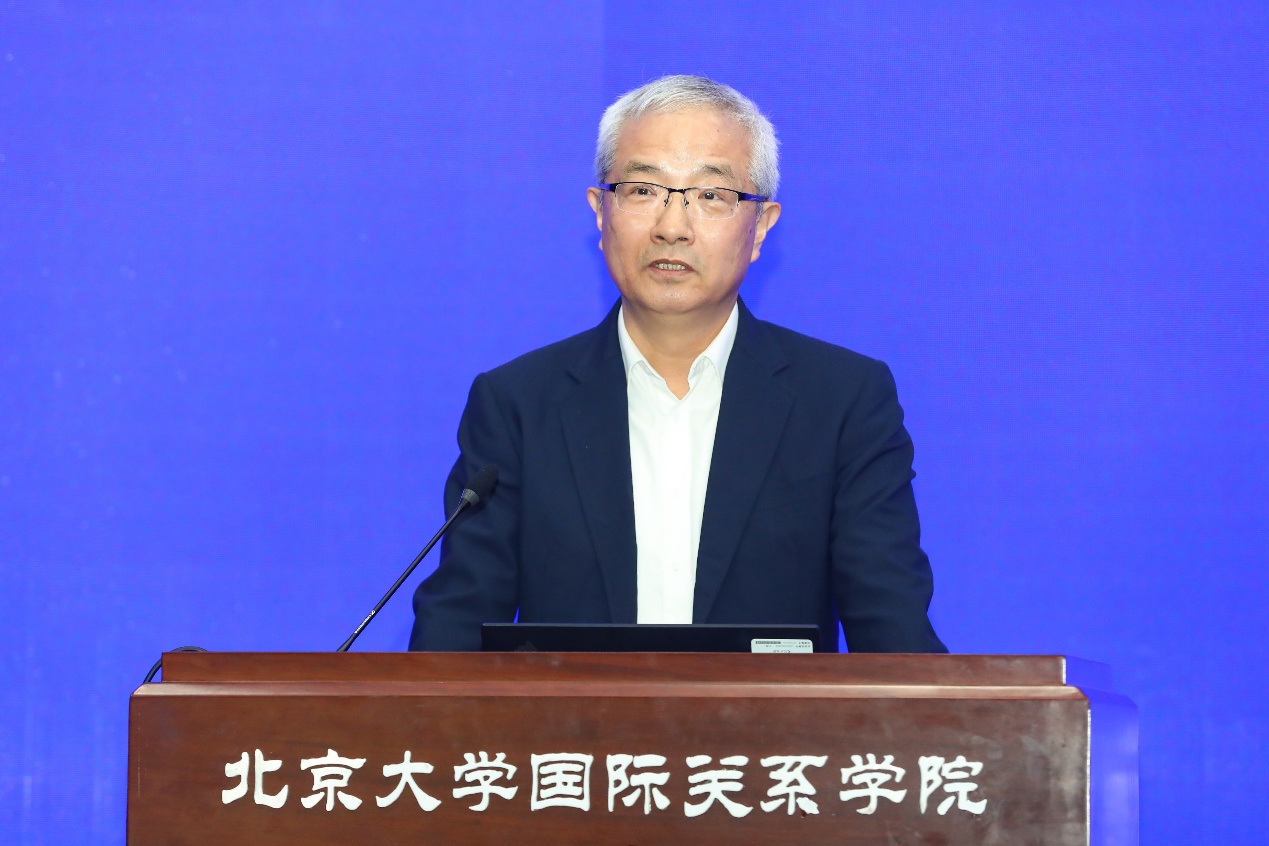
Yang Mingjie Speaking
Professor Jia Lieying, Former Dean of the School of International Relations at Beijing Language and Culture University, defined the core competency of an IR scholar as the ability to “cross-border translate”—translating complex international situations for decision-makers and translating Chinese narratives for the world. He summarized the IR spirit as a form of “sober optimism.”
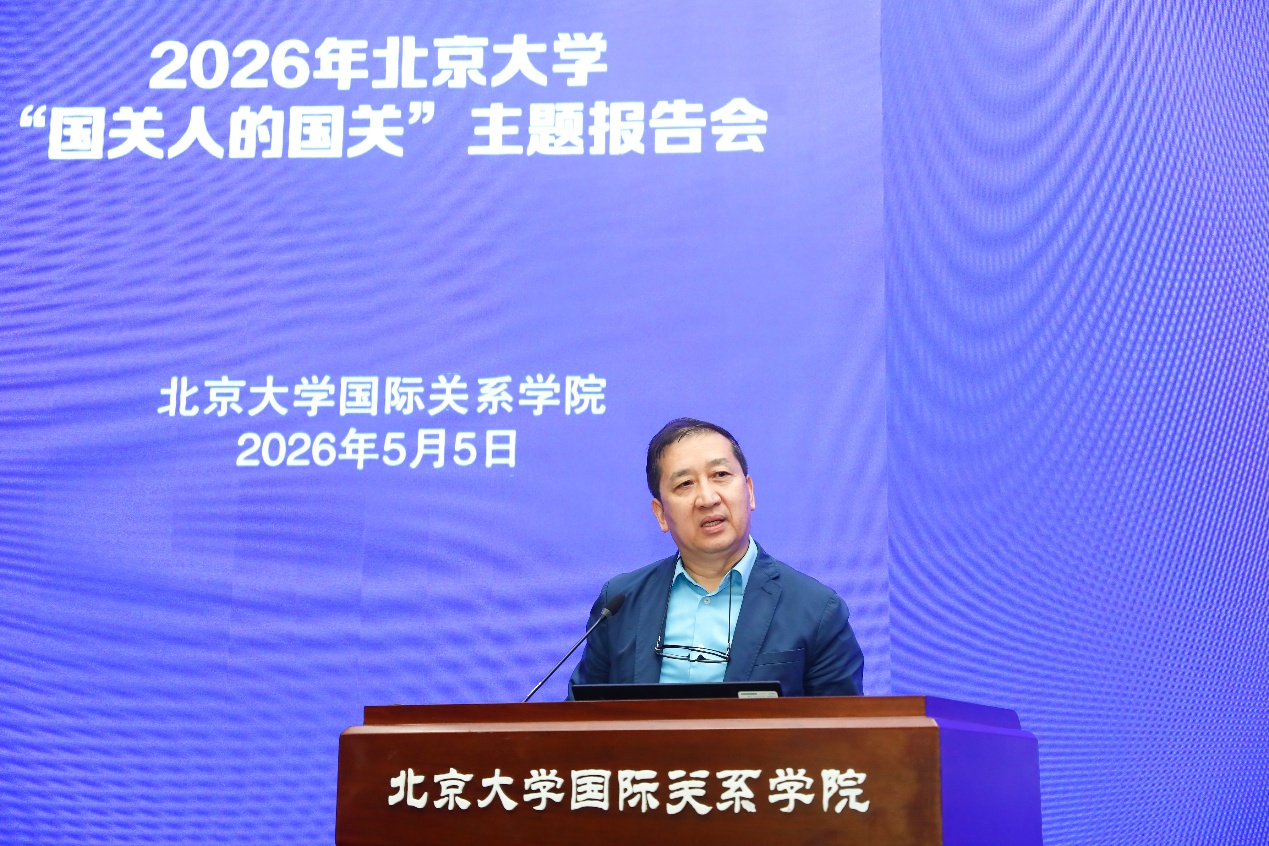
Jia Lieying Speaking
Professor Ren Xiaowei, Vice President of Shaanxi Normal University, shared his academic journey of maintaining research on the international communist movement, viewing the history of the international communist movement as a vital scientific method.
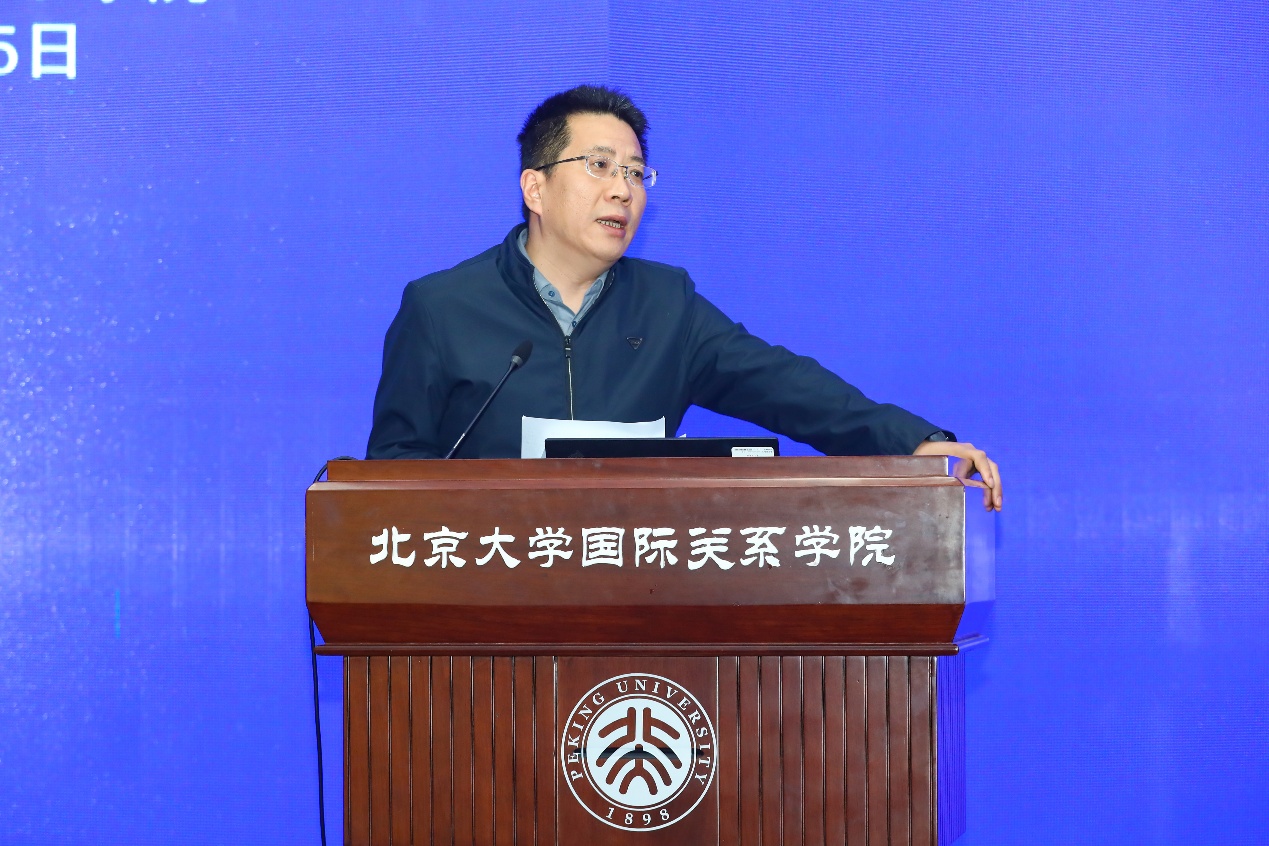
Ren Xiaowei Speaking
Lian Si, Vice President of the Central School of Communist Youth League, shared the latest research on the values of contemporary youth, noting that Gen Z functions as a mature “emotional complex” formed in an era of material abundance, requiring complex, parallel communication rather than single-track “positive energy” messaging.
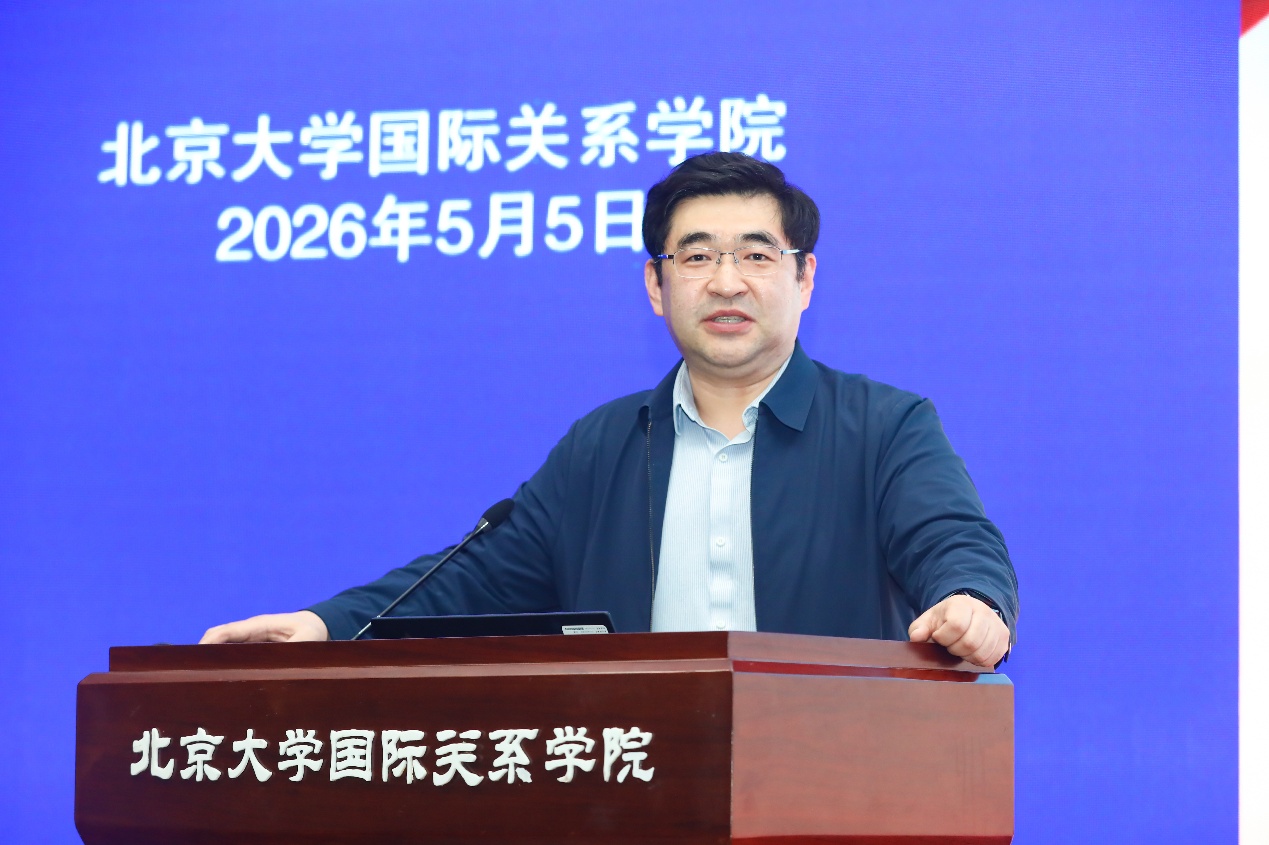
Lian Si Speaking
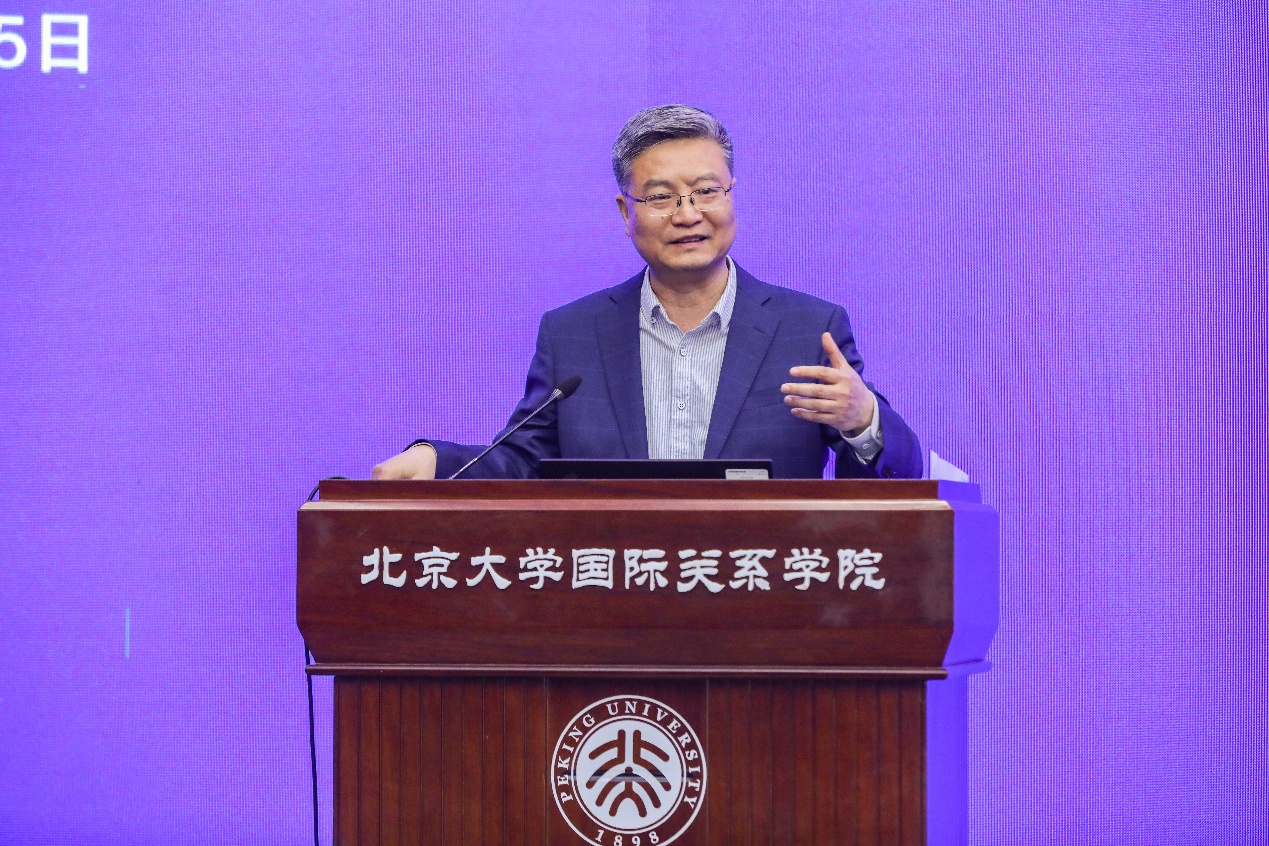
Zhang Haibin Moderating
Zhang Xiangchen, Deputy Director-General of the WTO, gave a special online report on “The Evolution of the International Economic and Trade Landscape and WTO Reform.” He emphasized that China’s role has evolved from a learner to a rule-shaper. He outlined multi-dimensional reform needs for the WTO and how China can play a larger role in leading these reforms to success.

Zhang Xiangchen Speaking
Professor Jia Qingguo of PKU SIS analyzed the current state of Chinese IR research, pointing out issues of utilitarianism, homogenization, and impetuousness caused by over-quantified academic evaluations. He proposed “reducing burdens” and “empowering” scholars to foster genuine innovation.
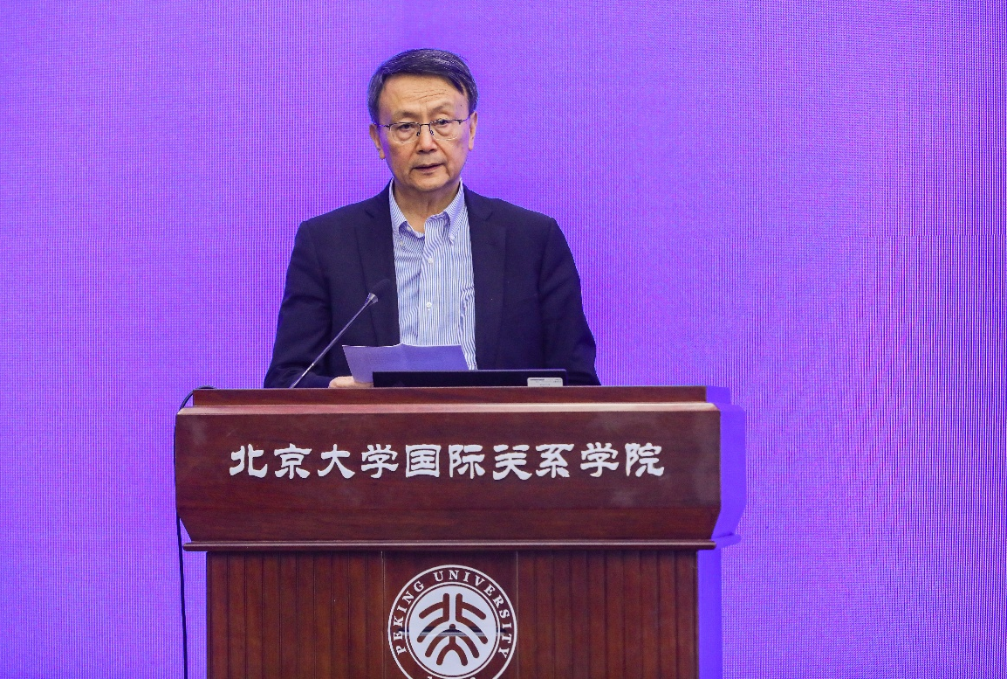
Jia Qingguo Speaking
Professor Gao Fei, President of China Foreign Affairs University, stated that the post-Cold War era has ended, and the world is undergoing another historic transformation. He encouraged IR scholars to seize this unprecedented historical opportunity for China’s rise with a global mindset.
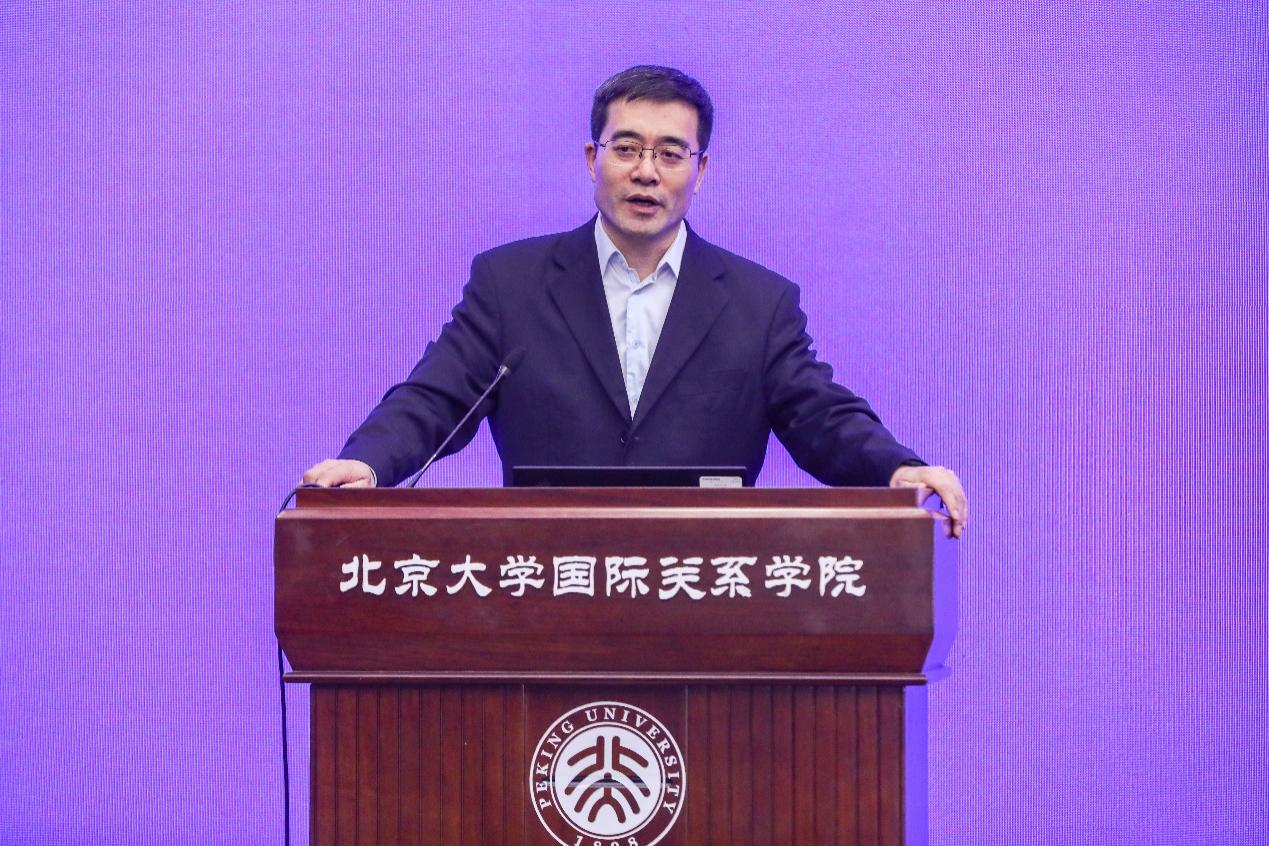
Gao Fei Speaking
Professor Liu Liqun, President of China Women’s University, highlighted that gender equality has transcended general social issues to become a core component of the modern international normative system and a benchmark for the modernization of global governance.
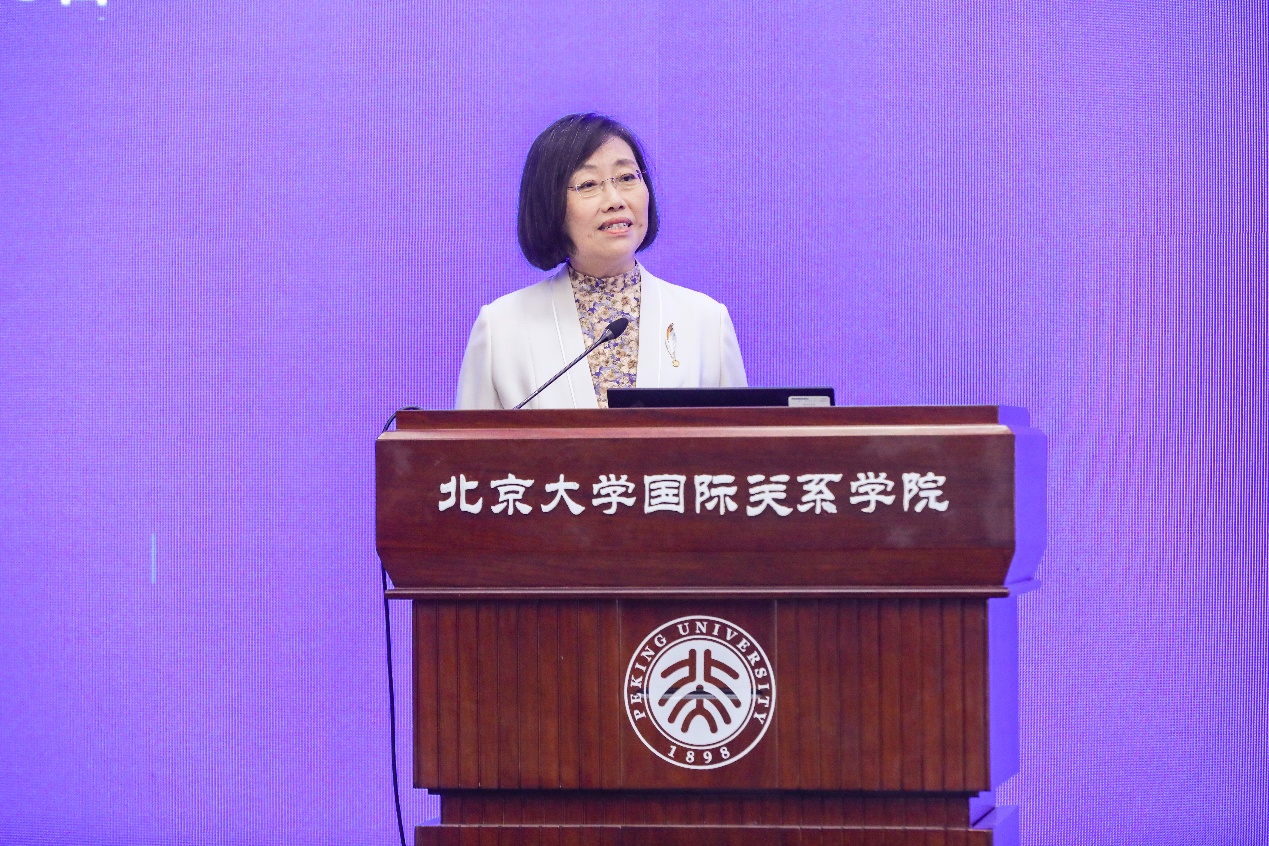
Liu Liqun Speaking
Professor Lin Hongyu, Vice President of Huaqiao University, analyzed the positive correlation between the growth of national strength (GDP) and the development of the IR discipline, urging the discipline to integrate emerging fields like area studies and national security studies proactively.
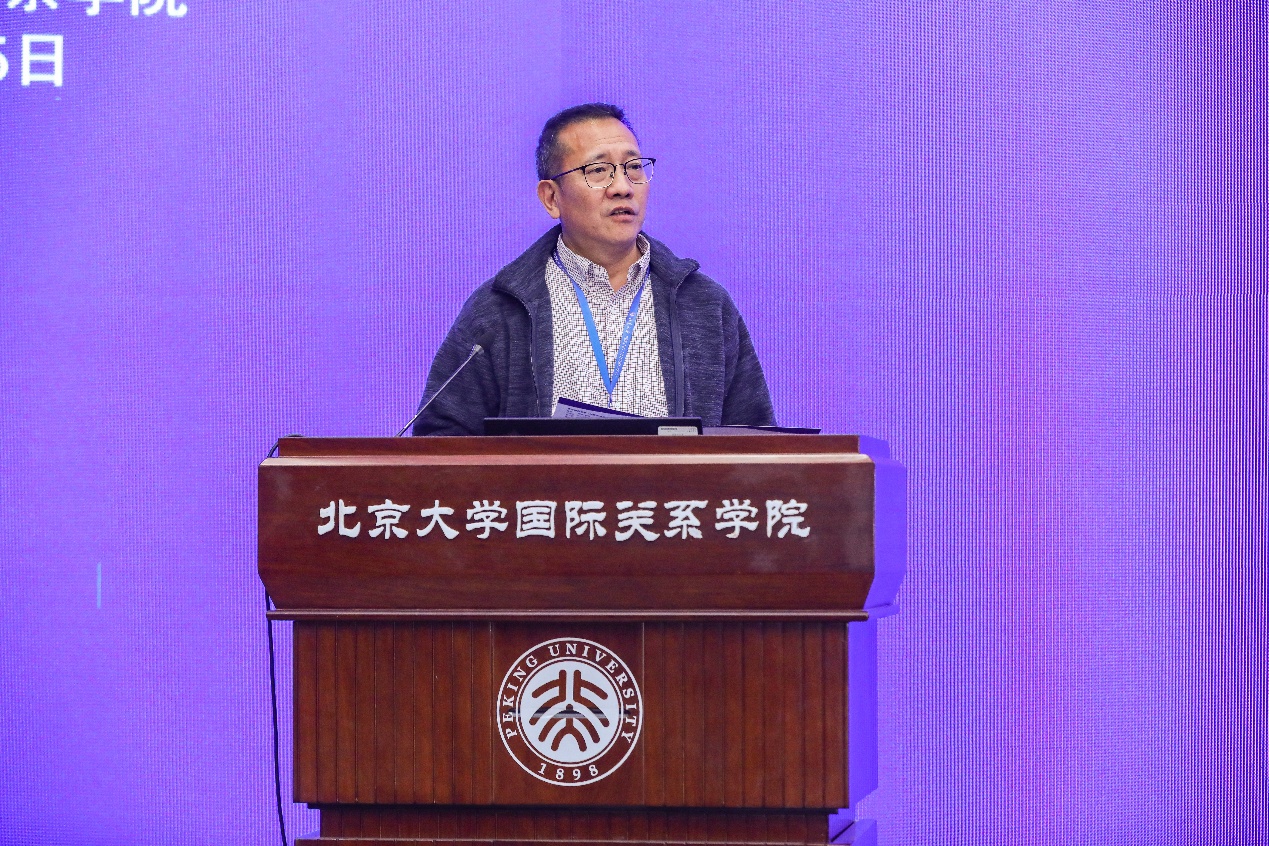
Lin Hongyu Speaking
Professor Men Honghua, Dean of the School of Political Science and International Relations at Tongji University, systematically reviewed the discipline’s evolution, calling for a strong sense of roots, subject, problem-solving, and openness to address major issues in China’s interaction with the world.
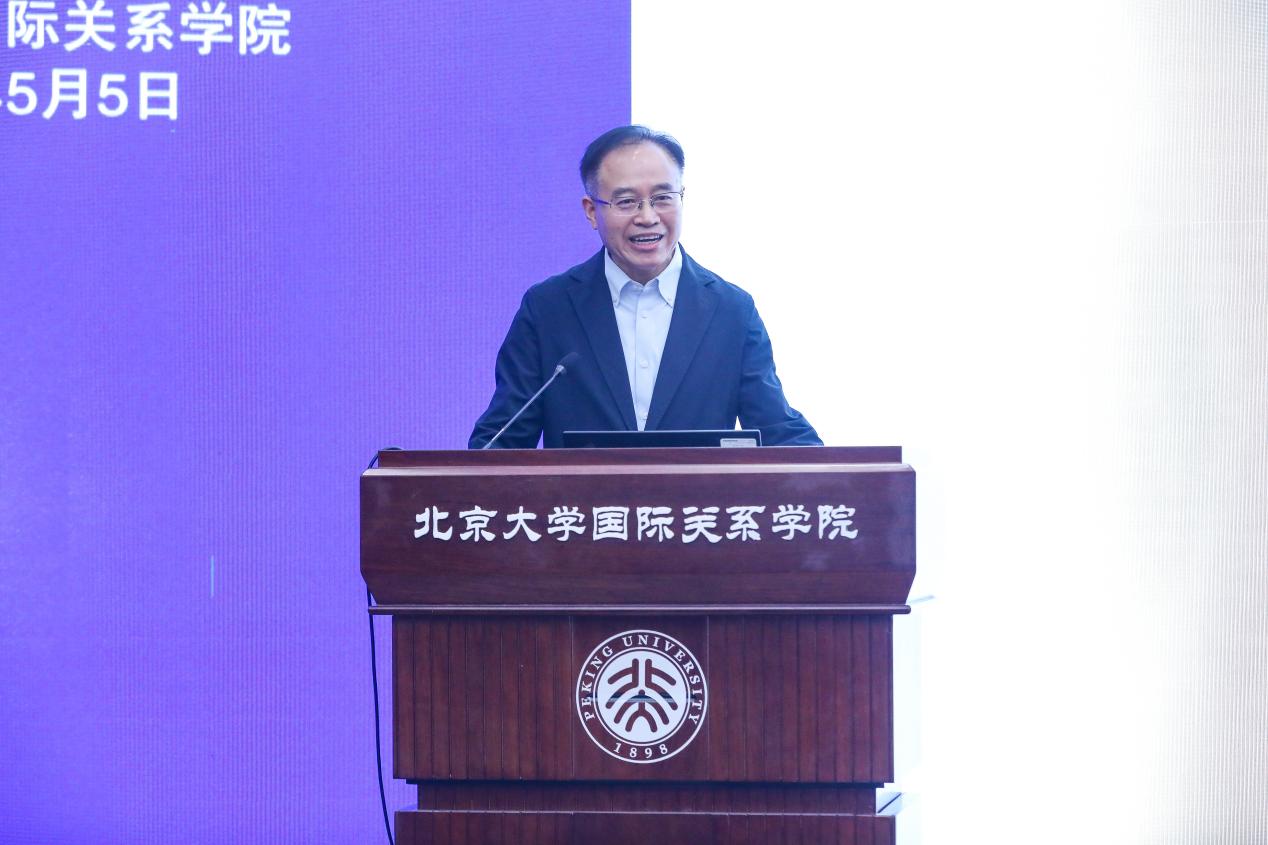
Men Honghua Speaking
Associate Professor Dong Zhaohua, Vice Dean of PKU SIS, moderated the second afternoon session.
Dong Zhaohua Moderating
Professor Li Yihu, Dean of the Taiwan Institute at Peking University, discussed the “Ontological Construction of China’s Autonomous IR Knowledge System,” calling for the extraction of globally significant, original concepts that possess Chinese ontological meaning.
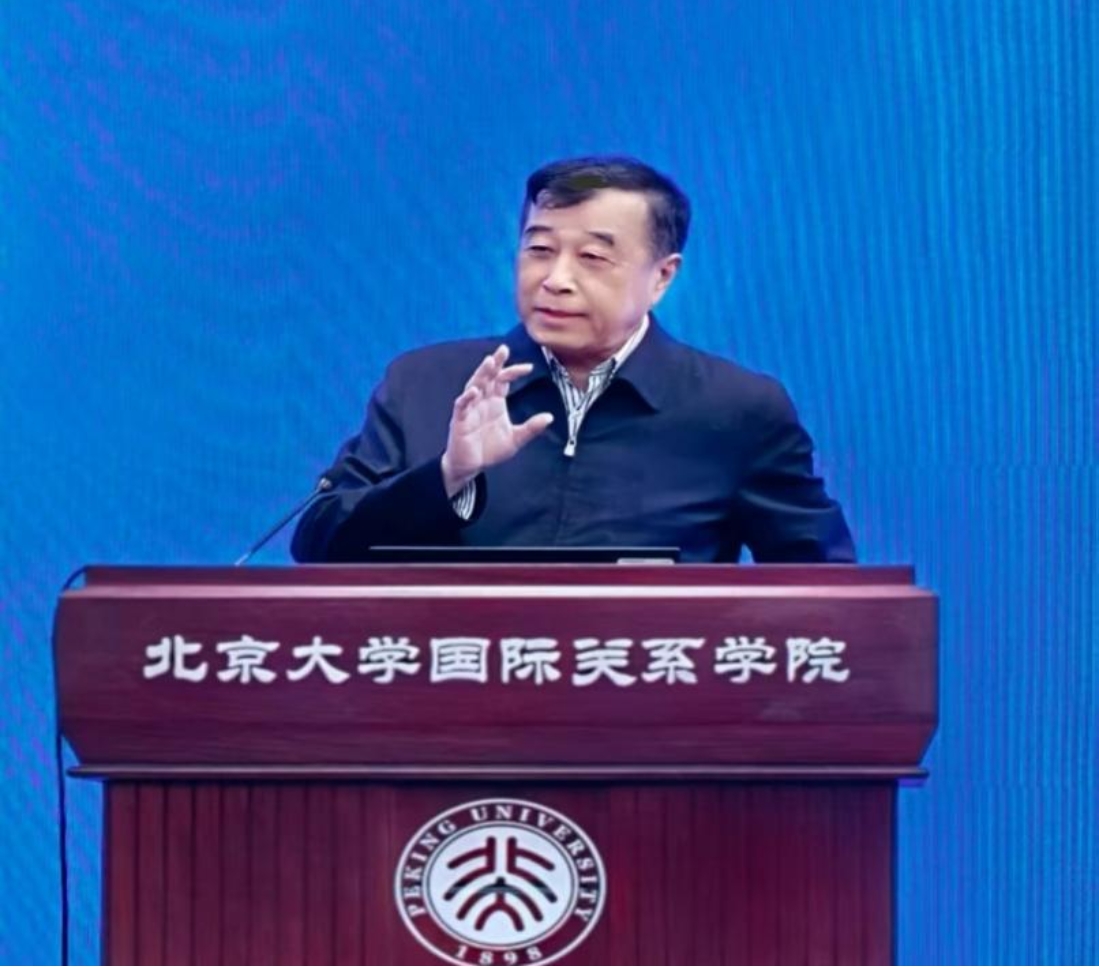
Li Yihu Speaking
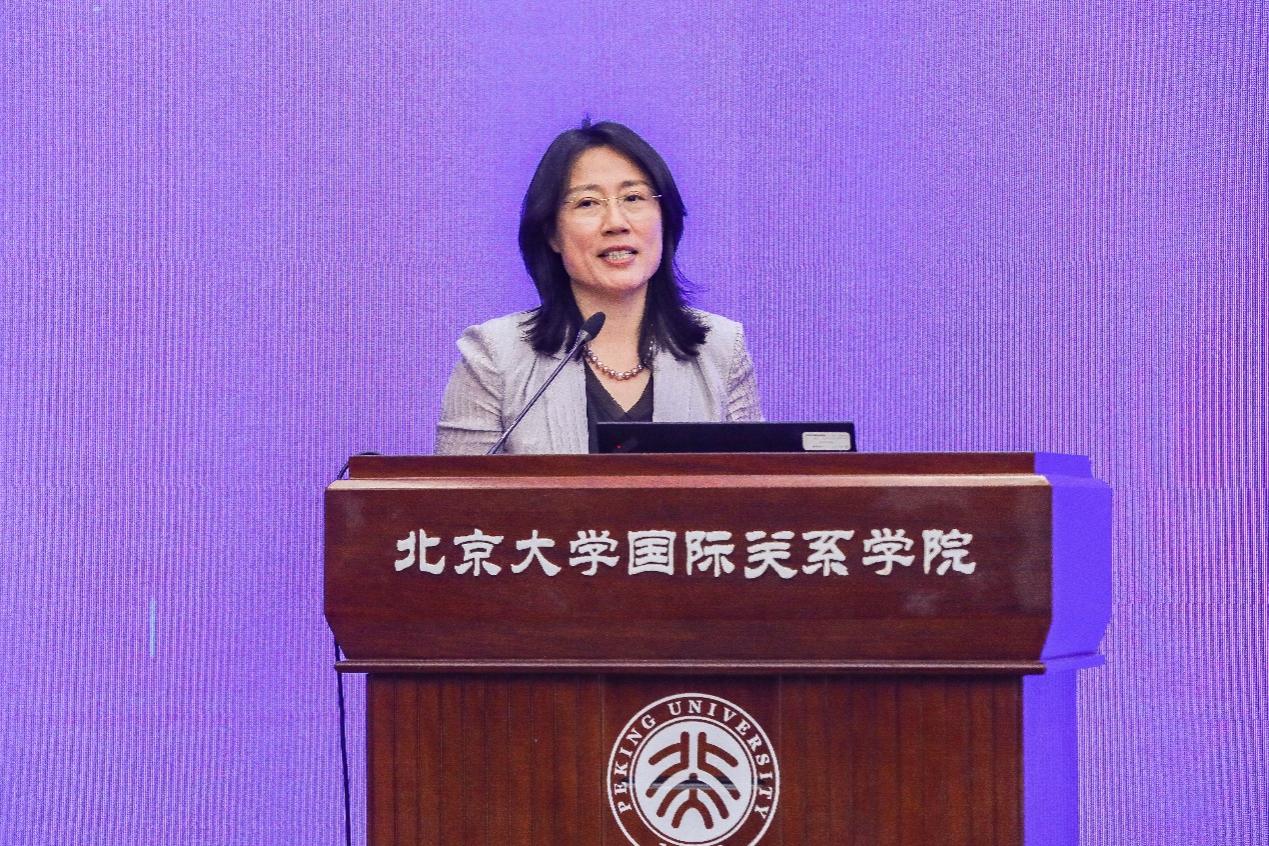
Professor Liu Tiewa, Executive Dean of the Academy of Regional and Global Governance at Beijing Foreign Studies University, shared her view that patriotism is not narrow isolationism, but the pursuit of uniting national interests with human welfare from a global perspective.
Liu Tiewa Speaking
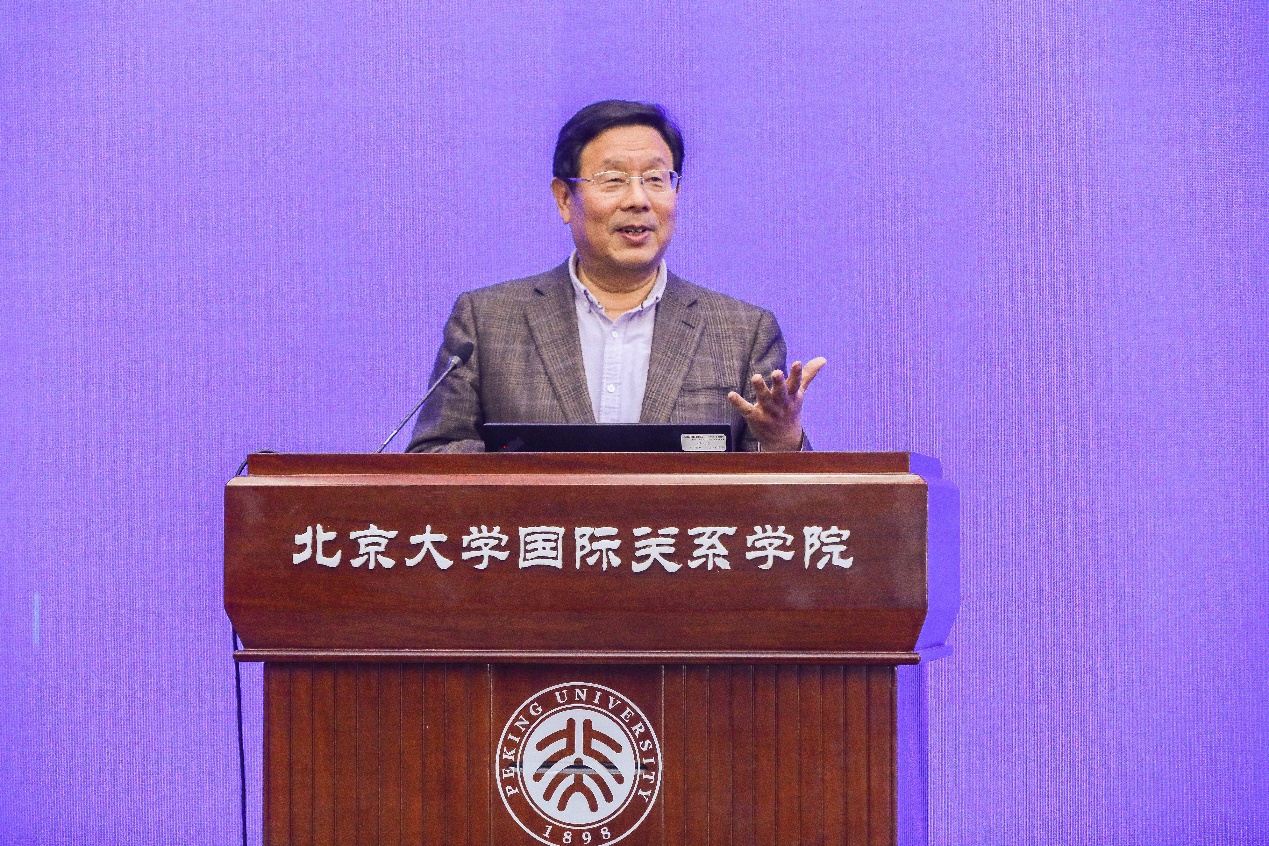
Professor Zhang Qingmin, Chair of the Department of Diplomacy at PKU SIS, argued that the return of power politics does not equate to the failure of diplomacy. Instead, it proves that diplomacy—resolving state differences peacefully—needs to play an even greater role, much like how the poor need the law more than the rich.
Zhang Qingmin Speaking
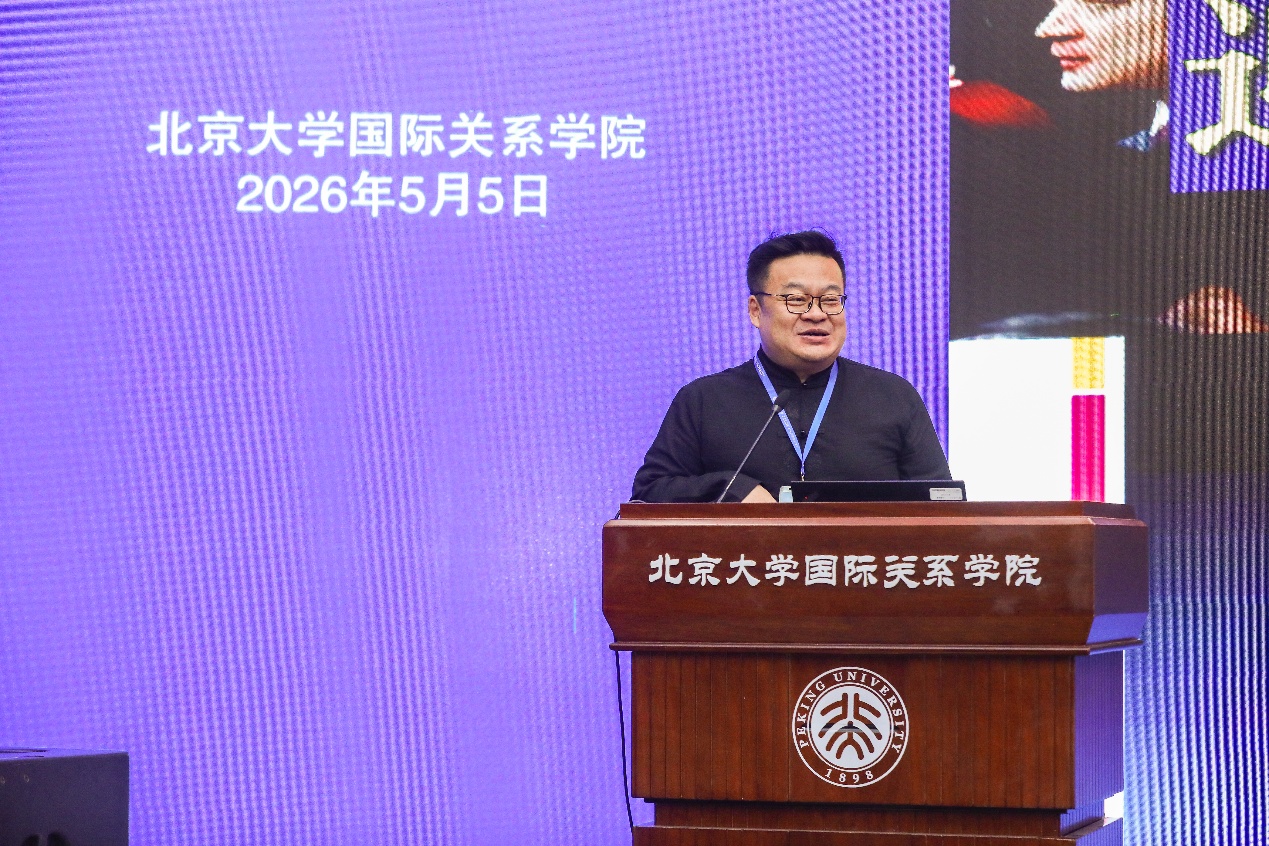
Professor Dong Guanpeng, Vice President of the China Public Relations Association, emphasized that in the “Smart Omni-Media Era,” transnational strategic communication capability is a core competency. He urged for the inclusion of soft-power and communication studies in IR education to support Chinese enterprises going global.
Dong Guanpeng Speaking
Professor Xue Xiaopeng, Dean of the School of International Relations at Dalian University of Foreign Languages, shared her experience of successfully radiating and transplanting the PKU SIS curriculum and academic spirit to a local university.

Xue Xiaopeng Speaking
In his closing summary, Dean Tang Shiqi encapsulated the traits of IR scholars as having a broad vision, an inclusive mindset, and a deep-seated sentiment for the world. Concluding with Wang Yangming’s philosophy of “the unity of knowledge and action,” he called on IR scholars to face an uncertain world with cautious optimism and contribute to human peace and development.
The symposium concluded to warm applause. It stands as a solemn academic tribute from PKU SIS alumni for the School’s 30th anniversary, a concentrated display of its talent cultivation achievements, and a collective retrospective and prospective look at the development of China’s international relations discipline.
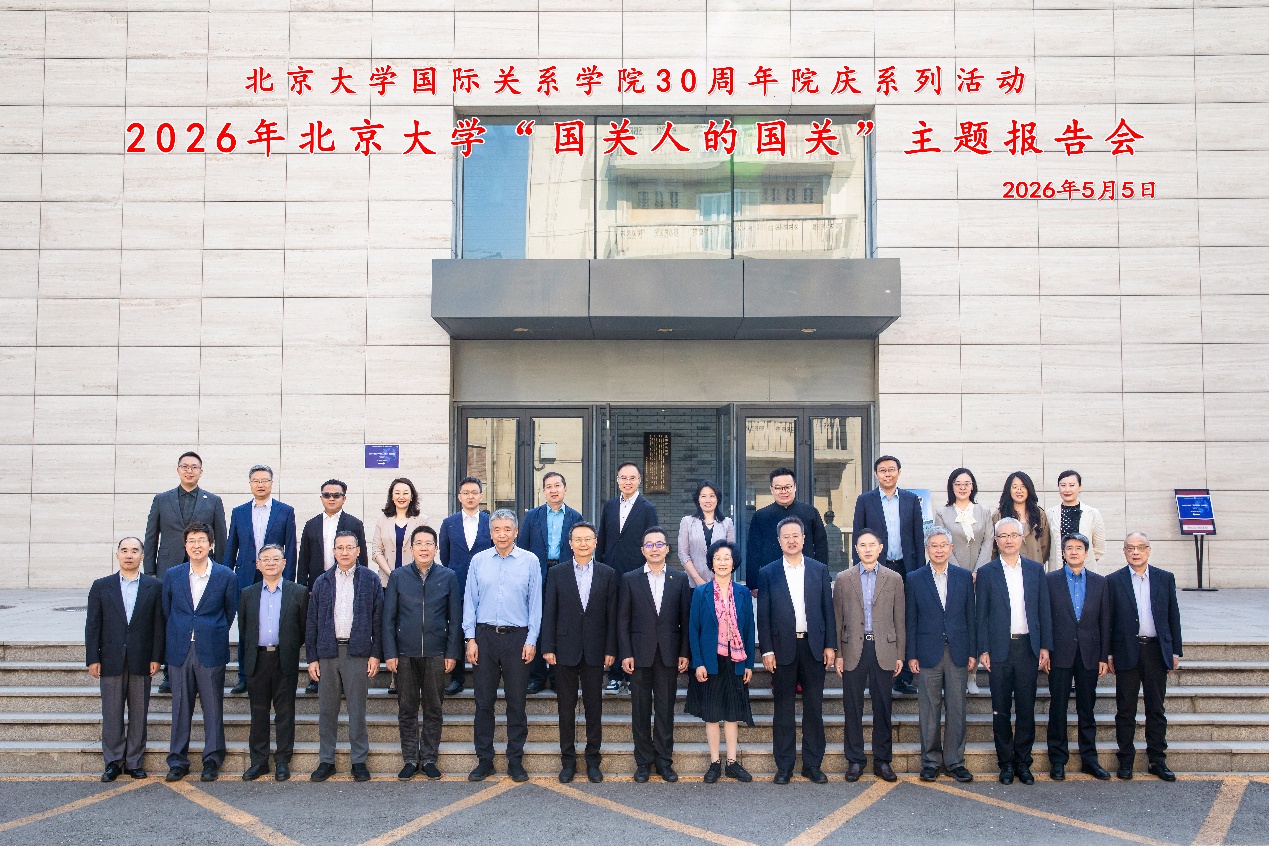
Group Photo
Written by: Gao Jingwen, Wang Yumeng
Photos by: PKU Photography Team
Edited by: Zhang Haibin
Source: SIS News (Chinese)